BPDCN: Aggressive, elusive, and urgent to treat
A rare hematologic cancer that requires urgency and precision
Blastic plasmacytoid dendritic cell neoplasm (BPDCN) is a rare, aggressive cancer that can be challenging to recognize due to heterogeneous clinical features and overlapping features with other hematologic cancers.2,3
BPDCN diagnostic features
Molecular presentation
BPDCN is characterized by overexpression of CD123, the IL-3Rα surface protein, on BPDCN cells.4,5
Classic triad marker
CD123+, CD4+, and CD56+ are typical immunohistochemical features of BPDCN that guide diagnosis. CD123 must be present for a confirmed BPDCN diagnosis.5,6
CD123 overexpression makes it a key therapeutic target for BPDCN5
Clinical presentation
BPDCN is commonly characterized by involvement of the skin, bone marrow, lymph nodes, blood, spleen, and CNS.2,4,6
Skin lesions
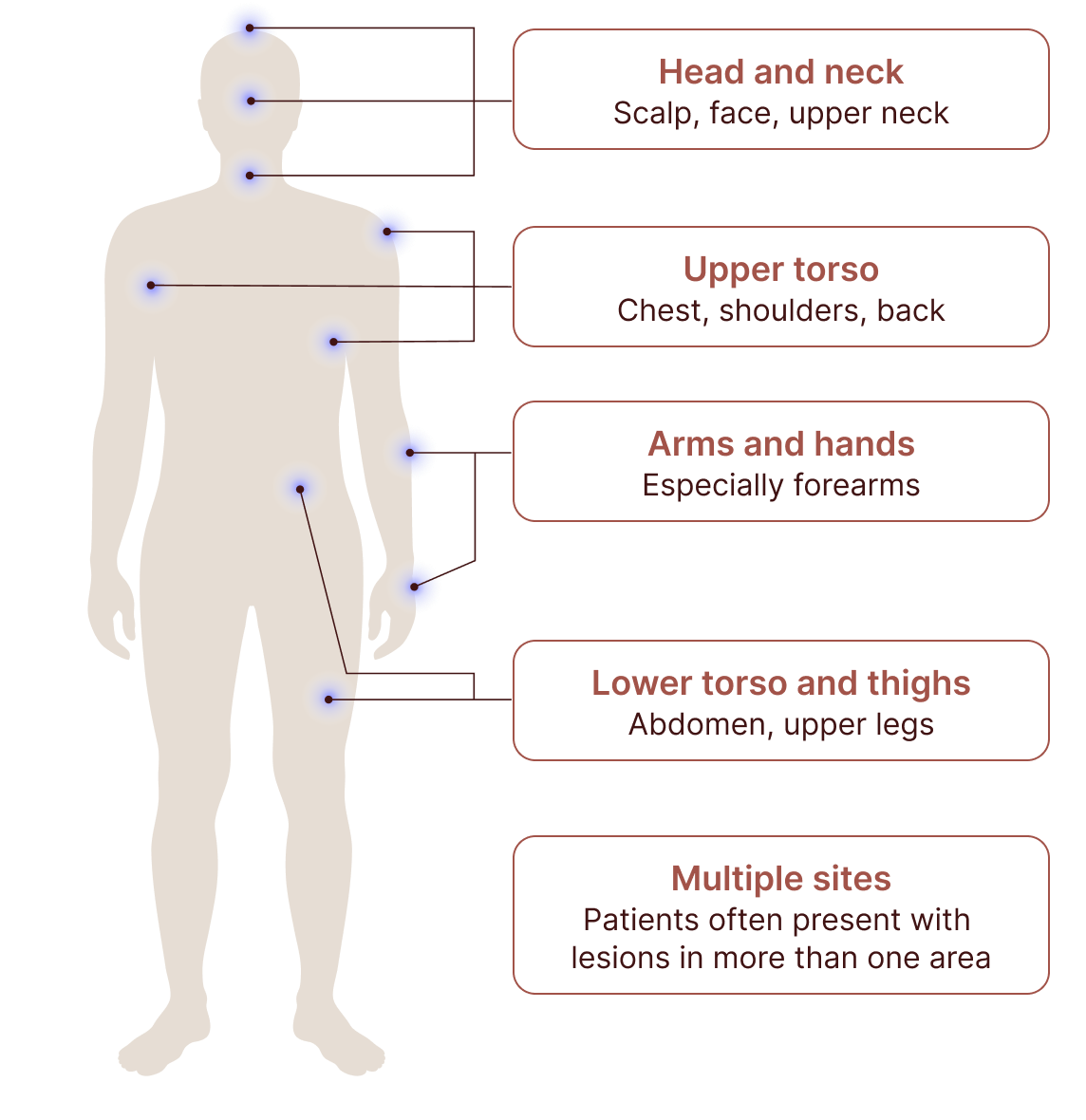
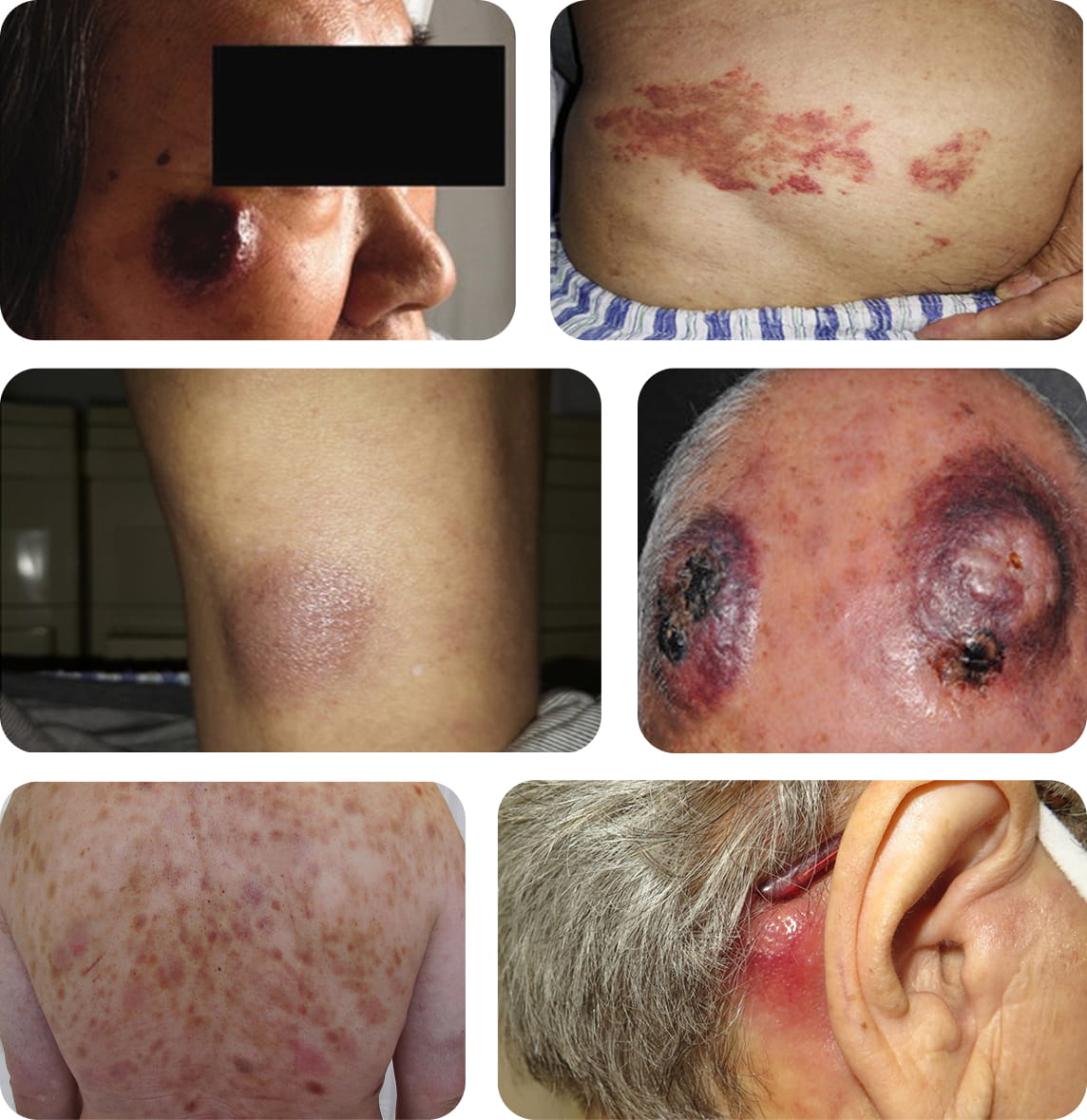
Approximately 90% of cases present with skin lesions varying in size, shape, color, and distribution. They can appear as rashes, bruise-like macules, plaques, or nodules.2,5
BPDCN=blastic plasmacytoid dendritic cell neoplasm; CNS=central nervous system; IL-3Rα=interleukin-3 receptor alpha chain